Get a custom-built IT system for your workflows
Do you have workflows, data or processes that do not fit well enough into a standard system?
At itpilot, we develop custom-built IT systems that bring users, data and workflows together in one solution. The goal is to give you a better overview, fewer manual routines and a system that fits the way you work.
A custom-built IT system can be relevant when your current solutions require too many compromises — for example because important data is spread across different places, processes are handled manually, or several systems do not connect properly.
When standard solutions do not fit your workflows
Many companies start with standard systems, Excel spreadsheets, emails and manual workflows because it is the quickest way to solve a need. This can work well for a period of time. But as the company grows, processes become more complex, or the need for data and overview increases, the solution often begins to show its limitations.
Perhaps employees use several different systems to complete one overall task. Perhaps the same information has to be entered in several places. Perhaps important data is spread across spreadsheets, emails, folders or systems that do not communicate with each other. Or perhaps you have tried to find a standard system, but found that it requires too many compromises.
In those situations, a custom-built IT system can be a better way forward. Not because more software should be built than necessary, but because you need a solution that supports the way the work is actually done — and that can bring together the processes, users and data that are currently spread across tools and workflows.
What can you use a custom-built IT system for?
A custom-built IT system can be used for many different purposes. What they have in common is that the system is built around your specific needs, instead of requiring you to adapt your workflows to a standard solution.
For example, it could be a system that helps you:
- gather cases, customers, orders or tasks in one place
- replace Excel spreadsheets, emails and manual routines
- automate approvals, calculations or status changes
- give employees access to the information they need
- create an overview for management, administration or operations
- gather documents, history and communication
- support quotations, product selection or configuration
- connect data from several existing systems
- give customers, partners or external users access to relevant information through a portal
For some companies, the need is an internal administration system that brings daily workflows together and creates a better overview. For others, it is a case management system, customer portal, planning tool, calculation system or a solution that replaces manual processes in Excel and emails.
In some cases, the solution is not a classic administration system, but a configurator that helps with product selection, calculations or quotation processes. This can be relevant when sales, advisory services or order processing involve many choices, rules and dependencies..
An IT system built around your everyday work
A custom-built IT system should not only fit a requirements specification. It should fit the everyday context in which employees, customers, partners or other users will use the solution.
That is why we start by understanding how the work is carried out in practice. Who will use the system? What data do they need? Which steps does a case, order or process need to go through? What should be automated, and where is human assessment needed?
When the system is built around your everyday work, the solution becomes easier to use, easier to implement and more relevant for the people who will work with it.
A custom-built IT system can be developed with different user roles and permissions, so users only have access to the functions and information that are relevant to them.
This could include employees, administrators, managers, customers, partners or external users. Some may need to create and edit data, while others only need to view a status, approve an action or retrieve documentation.
By considering user roles and access control from the beginning, the system can become both easier to navigate and more secure to work in.
Many custom-built IT systems are, in practice, about gathering data that is currently spread across different places. This may include information about customers, cases, orders, products, documents, statuses, history or internal processes.
When data is gathered and structured correctly, it becomes easier to find information, follow developments and make decisions on a better basis.
The system can also be developed with dashboards, reports or overviews that give management, administration or operations a better overview of the most important key figures and activities.
Many companies have workflows that do not fit into a standard model. There may be specific approvals, calculations, status changes, documentation requirements or rules for who is allowed to do what and when.
A custom-built IT system can be developed to support the exact workflows and rules that apply in your organisation. This can make processes more consistent, reduce errors and ensure that important steps are not forgotten.
It can also make it easier to onboard new employees, because the system guides users through the processes they need to follow.
A custom-built IT system often needs to work together with the systems you already use. This could be ERP, CRM, accounting software, webshop, PIM, BI platforms, inventory management or other business-critical solutions.
When systems are integrated, data can flow automatically between solutions. This reduces duplicate data entry, manual checks and the risk of errors.
At itpilot, we develop both custom-built IT systems and integrations, so the solution can become a natural part of your existing system landscape.
Read more about system integration development ->
Call us if you would like further information about custom development of IT systems
 +45 87 25 07 87
When the system needs to handle important data
A custom-built IT system can become a central part of your daily operations. That is why it is important to consider security, access control, data protection and documentation from the beginning.
This is especially important if the system handles personal data, business-critical data, integrations or processes where there are requirements for control and documentation.
At itpilot, we have both ISAE 3402 and ISAE 3000 assurance reports. These reports document that selected controls, processes and security measures are described, implemented and reviewed by an independent auditor.
For companies and organisations where data protection, supplier management and documentation are important, ISAE assurance reports can provide valuable documentation when assessing a supplier for a custom-built IT system.
Read more about our ISAE 3402 and ISAE 3000 assurance reports
How do you go from need to system?
A custom-built IT system often starts with a specific need in everyday work. It may be a process that takes up too much time, an Excel spreadsheet that has become too important, a standard system that is no longer sufficient, or a desire to gather data and workflows in one place.
At itpilot, we help you turn that need into a concrete solution.
1
1. We map your workflows
We start by understanding the processes the system needs to support. Here, we look at how the work is carried out today, which systems you use, where bottlenecks occur, and where there is potential to create a better overview or more efficient workflows.

2
2. We define users, data and functions
Together, we clarify who will use the system, which data needs to be handled, and which functions are most important to include from the beginning. Often, it makes sense to start with a clearly defined first version that solves the most important needs, and then develop the system further as it is put into use.

3
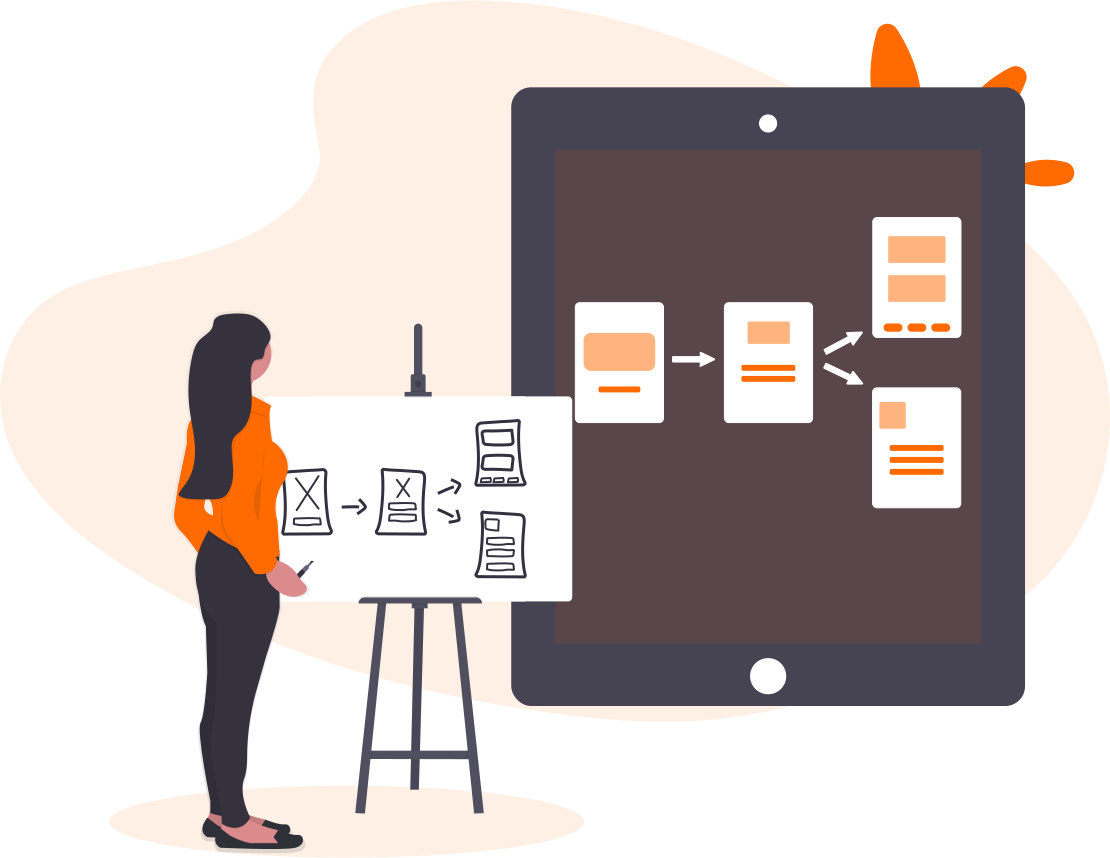
3. We design the system flows and screens
Once the need is clear, we make the system structure, user flows and key screens more concrete. This makes the solution more tangible and ensures that both functionality and user experience are considered before development begins.

4
4. We develop, test and adjust
We then develop the system in close dialogue with you. Along the way, we test key functions, workflows and integrations, so the solution can be adjusted and adapted to the way it will be used in practice.

5
5. We help with implementation and further development
When the system is ready, we help with implementation, training, operation and further development. This ensures that the solution is put to good use and can be adapted when your needs, processes or system landscape change.

Shall we talk about the system you are missing?
Do you have workflows, data or processes that do not fit well enough into your current systems? Let us have a non-binding conversation about how a custom-built IT system can give you a better overview, fewer manual routines and a more connected everyday workflow.
Call us if you would like further information about the development of your IT solution.
 +45 87 25 07 87
What does a custom-developed IT system cost?
The price of a custom-built IT system depends on what the system needs to do, how many users and roles it needs to support, which data needs to be handled, and whether the solution needs to be integrated with other systems.
That is why we typically start by clarifying your needs, workflows and scope. This makes it possible to assess which functions are most important from the beginning, and whether it makes sense to start with a clearly defined first version that can be developed further over time.
Once we have a clear picture of your needs, we can estimate the task and prepare a non-binding offer for a solution that fits your workflows, users and business needs.
Selected cases with custom-built solutions
Here you can see examples of how we have helped companies and organisations develop digital solutions that fit specific workflows, users and business needs.